Cape Saffron
Cassine peragua
Common names: Bastard saffron, false saffron, bastard saffronwood (Eng.); bastersaffraan, lepelhout (Afr.); iKhukhuzi (Xhosa)
SA Tree No: 414
Size:
An evergreen shrub or small to medium-sized tree with a rounded crown, usually 2-5 m tall but it can be a handsome well-branched tree up to 12-15 m in height with a trunk diameter of 1 m..
Bark:
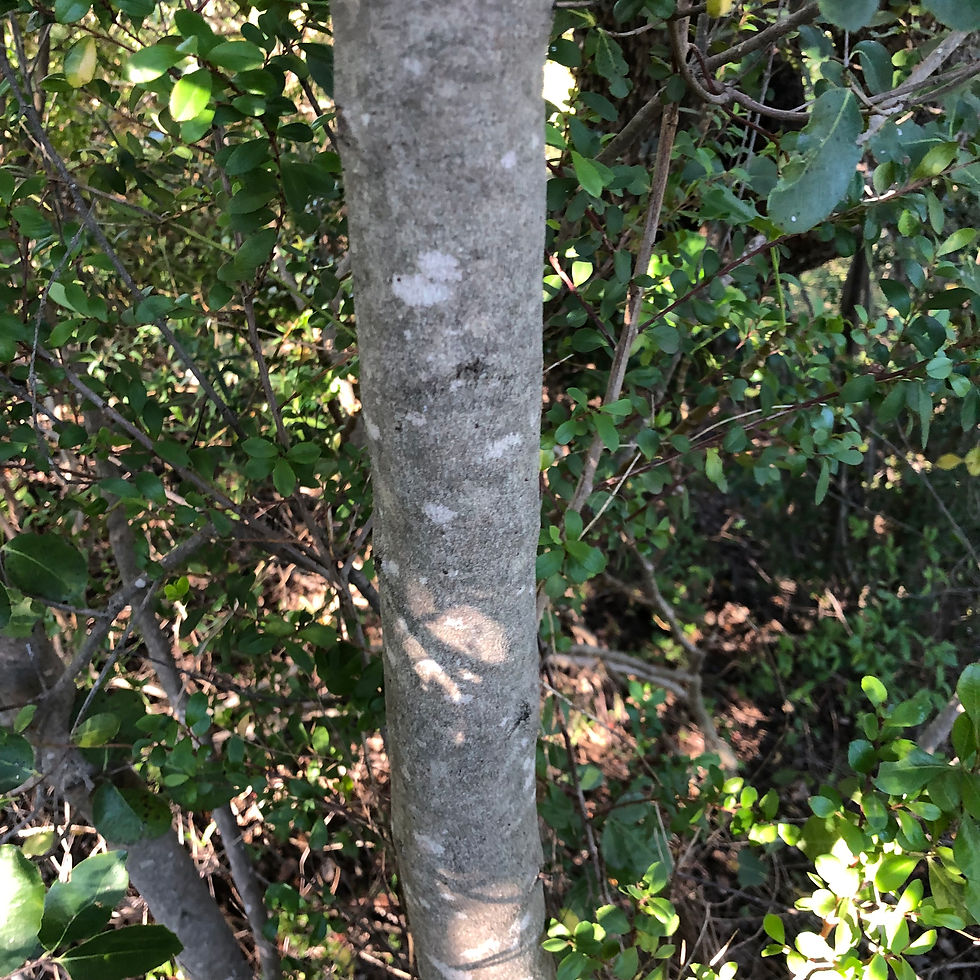
he trunks are often crooked. The bark is greyish brown becoming flaky and falling off in thin scales to expose the powdery saffron-yellow pigment in the outer layers of the bark.
Leaf:
Leaves are tough, thick and leathery, shiny dark green above and paler and smoother underneath, elliptic to almost round, with rounded and often notched tips. New growth is copper-coloured.
Flower:
The flowers are small, white and fragrant, borne in loose branching clusters in from late summer to winter (Feb.-June).
Fruit:
The fruits are a small oval berry up to 5 mm in diam., green turning yellow then reddish-purple and finally dark purple and fleshy when mature, usually containing 1 or 2 seeds but potentially 6 seeds.
Growth Habit:
is a quite slow-growing.
Habitat:
It grows in forest, forest margins and in kloofs, in dune scrub, coastal thickets, on dry rocky areas, on mountain slopes, and along streams.
Wildlife:
The fruits are eaten by birds.
Distribution:
It occurs from the Bokkeveld Mountains to the Cape Peninsula along the coast through the Eastern Cape and KwaZulu-Natal into Swaziland and at a few isolated localities in Mpumalanga and Limpopo. .
Uses:
The wood is yellowish, hard, tough and very handsome when varnished. It was used by cabinet-makers and wheelwrights and makes good sticks. In the time of Van der Stel it was used for making a large type of ladle (lepel).
The leaves are reported to be toxic and have caused deaths in animals in trials.

Growing it...
Cassine peragua can be propagated by seed or by cuttings. Seed can be sown fresh in late summer or stored and sown the following spring to early summer. Clean the flesh off before sowing. They could also be sown in autumn in frost-free areas but we have had better results from sowing in the warmer months.
Take heel or tip cuttings from semi-hardened-off new growth in spring or early summer. We get good results from choosing the longer, thinner stems from the growth on the shady side of the tree or from inside the canopy. Treat with a rooting hormone, use a well-drained medium like milled bark and polystyrene and place under mist. They are slow to root. If nothing has happened after 3-6 months it is most likely that they have formed a callus but failed to form any roots. Take them out, damage the callus by scoring it, re-treat with rooting hormone and re-plant in fresh rooting medium and put it back under mist. This usually proves effective in stimulating the cuttings to produce roots.
April Photo's