Bladder-nut
Diospyros whyteana
Common names: Blackbark (Eng.); Swartbas (Afr.); umTenatane (Xhosa)
SA Tree No: 611
Size:
The bladdernut is an evergreen shrub or small multi-stemmed tree which can reach 6m in height.
Bark:
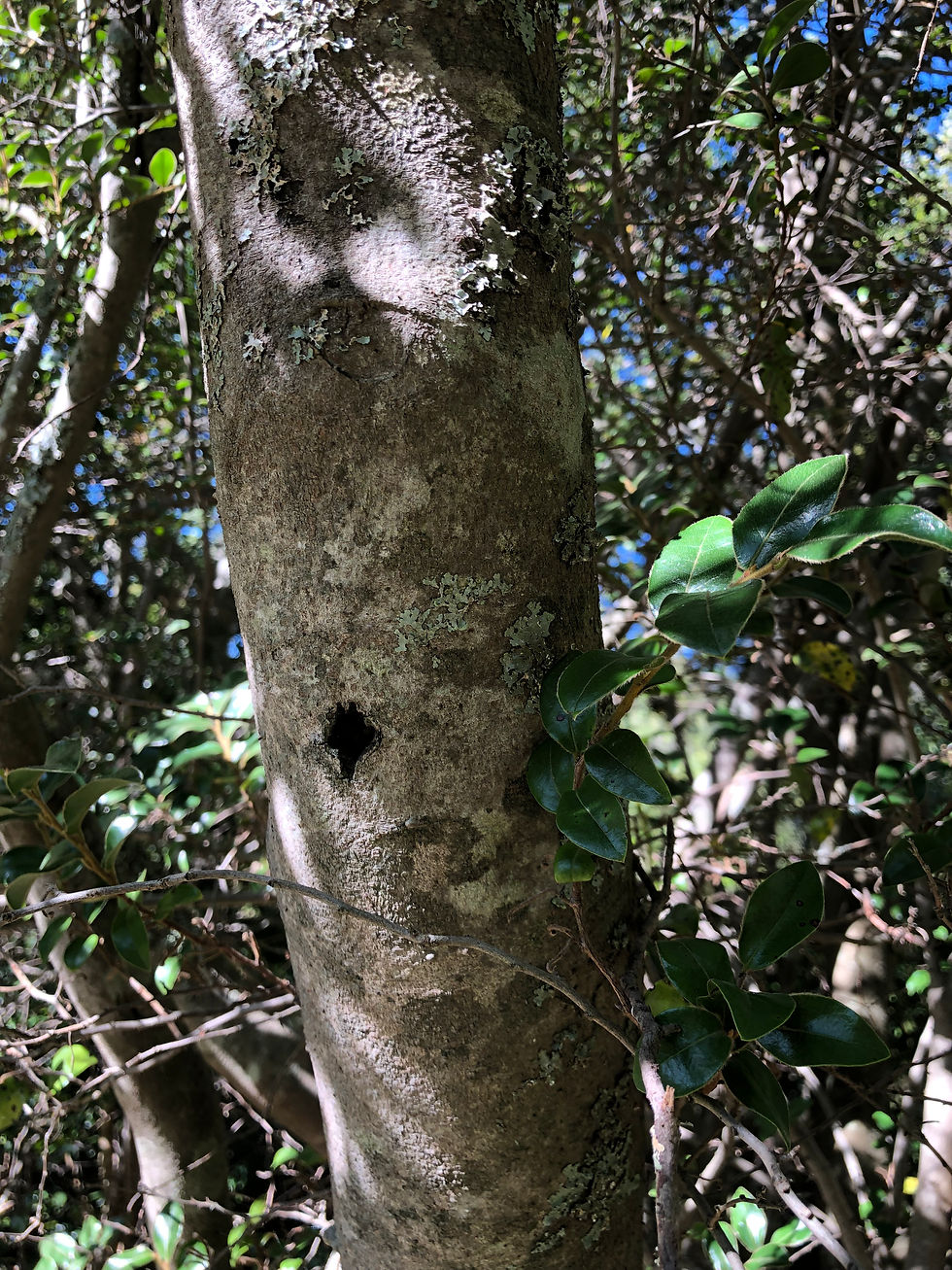
Unusual smooth, dark grey, almost black bark.
Leaf:
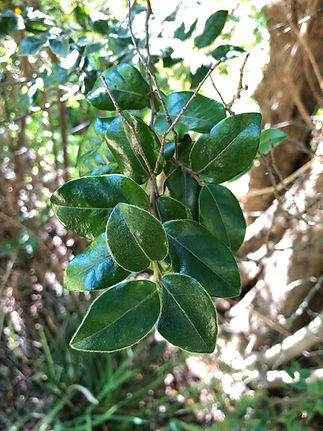
Glossy, almost mirror-like, dark green leaves, with a fringe of ginger hairs.
Flower:
The clusters of small, fragrant, bell-like creamy white flowers are borne from July to October. Male and female flowers occur on separate trees.
Fruit:
Only the female plants bear the masses of showy, fleshy berries that turn scarlet when ripe, and are borne throughout summer. The fruits are enclosed inflated, papery, balloon-like or bladder-like structures.
Growth Habit:
Fairly fast growing if provided with an optimal environment.
Habitat:
It can be found growing naturally in Afromontane forests, and on rocky mountain slopes.
Wildlife:
The leaves are browsed by stock and game, and the fruits attract all kinds of birds, but especially birds like the Rameron pigeon, African green pigeon, loeries, barbets and bulbuls..
Distribution:
The Bladdernut has a wide distribution in all the provinces from the Western Cape and right up the coastal belt through to the Highveld, extending as far north as Ethiopia.
Uses:
Traditional healers use bark extracts as enemas and for treating menstrual pain, impotency and infertility, and a leaf and root infusion can also be used to treat rashes.
Its dense foliage responds particularly well to clipping, making the Bladdernut a very good hedging or screening plant,

Growing it...
The tree can be propagated from seed, which should first be scratched (scarified) before sowing. Fresh seed germinates readily in four to eight weeks.
Bladdernuts are relatively pest and disease free, but may occasionally be attacked by brown scale or sooty mould. These are easily treated with an appropriate pesticide or fungicide.
Further applications of compost, manure or a general purpose fertiliser during the year will also encourage a strong, healthy root system and faster growth.
April Photo's